
My Counselling
Counselling goes further than coping skills and social-media mantras — although, if something is ethical and genuinely helps, then we certainly make use of it! The real value of counselling comes from gaining understanding and promoting self-awareness, then empowering and sustaining you as you choose how you move forward in your life. You might be facing or wanting to make changes: how best to carry that out? Perhaps understanding things a little better might help you feel more compassionately about yourself and/or others, or might help you change how you think or react to situations? Perhaps you wonder about the differences between acceptance and resignation, and balancing those could help you alongside your growth in other areas?
What makes me qualified to help you? I have an MSc in Counselling, and I’m a member of the British Association for Counselling and Psychotherapy, working within their ethical framework and guidelines. I'm a pluralistic therapist and take a trauma-informed approach, drawing from diverse therapeutic approaches. I have a particular interest in Acceptance and Commitment Therapy, Compassion Focused Therapy, Cognitive Behavioural Therapy and Existential Therapy. I might also advise ways to make more purposeful use of your current interests, such as walking, nature, reading, or mindfulness. I'm experienced in how therapy can support people living with illness, exhaustion, pain, and other bodily conditions. I'm particularly fascinated by how biology, chemistry, and neuroscience can help us understand the complexities of being human. I am continuously developing my therapeutic knowledge and expertise, as well as my own capacity to offer safe, affirming therapy for clients of all backgrounds and lifestyles.
I’ve worked with clients experiencing a wide range of problems in their lives, including: anxiety, depression, thoughts of suicide or self-harm, low self-confidence, identity issues, perfectionism, relationship issues, stress, burnout, grief, transitions, insecure attachment, attention-related difficulties, health anxiety, acute and chronic pain/illness, childhood neglect and trauma, climate/eco anxiety... But let’s be honest - these lists often seem a little pointless. What you’re struggling with is rarely a generic issue or label, even if there can be some comfort in finding your “thing” is mentioned. Give me a shout, let me know what’s affecting you, and I’ll always be honest about whether I’m hopeful I can help.
Where is counselling held?
My counselling can be provided in-person, online, or as walk-and-talk therapy.
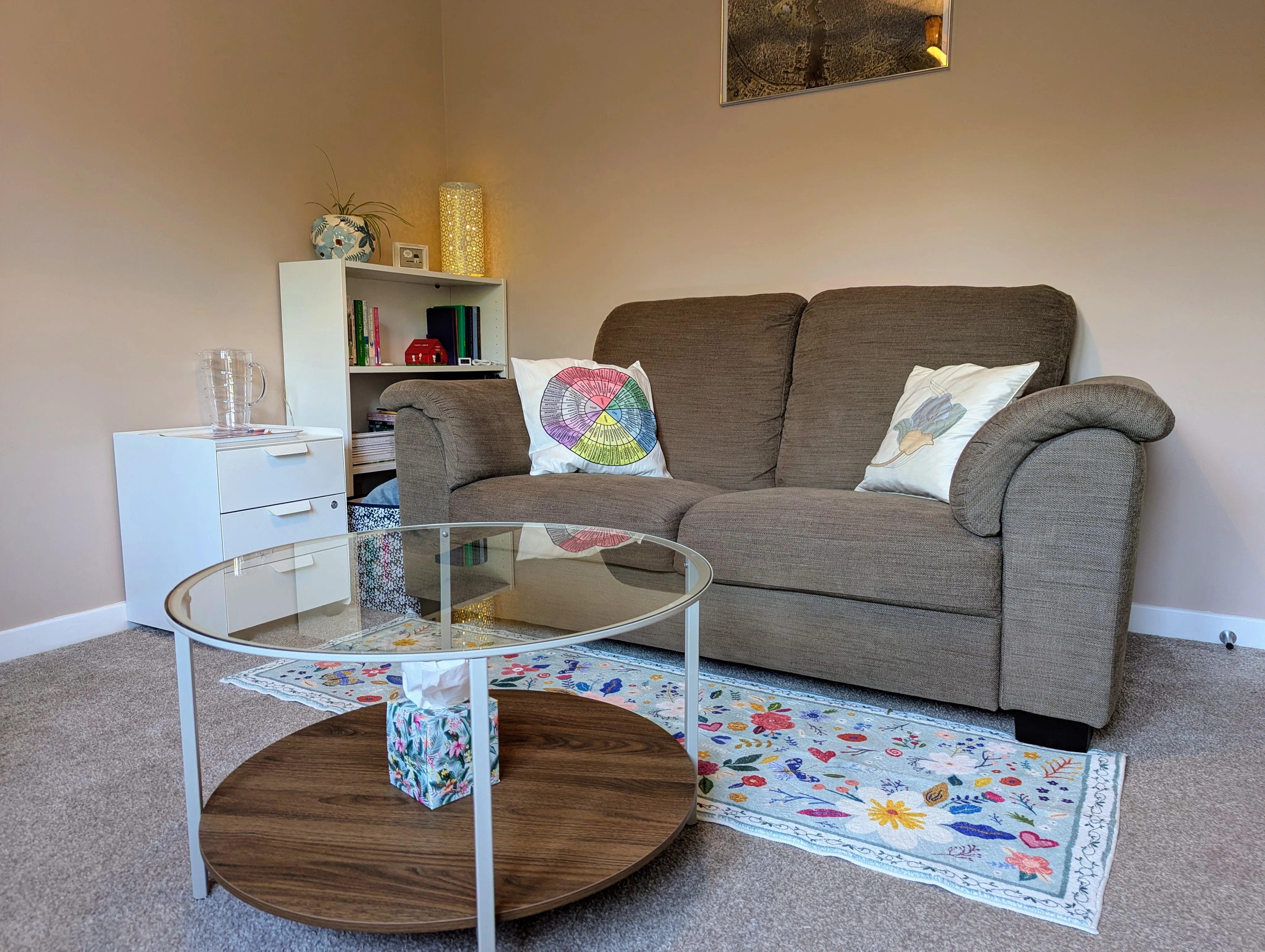
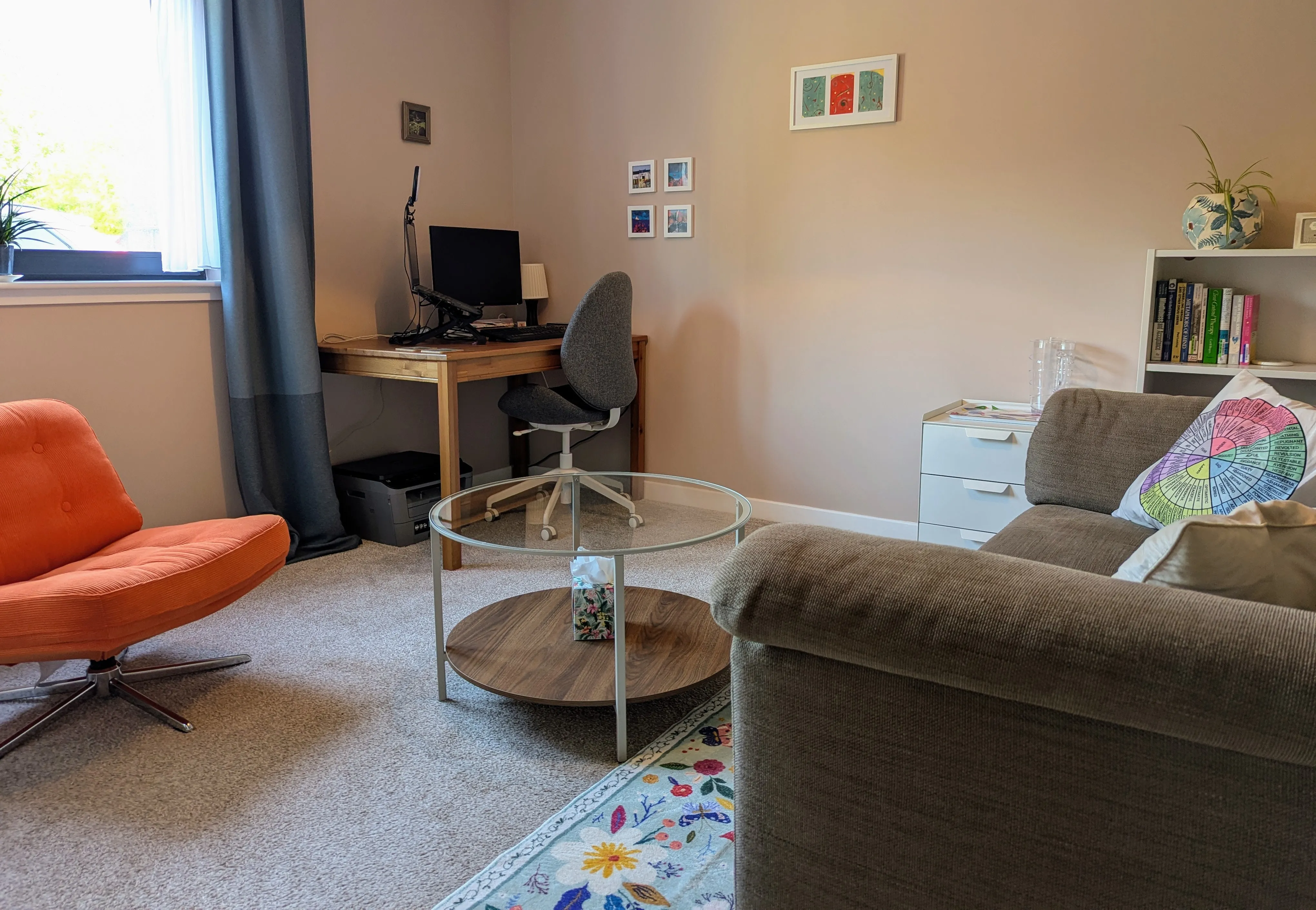
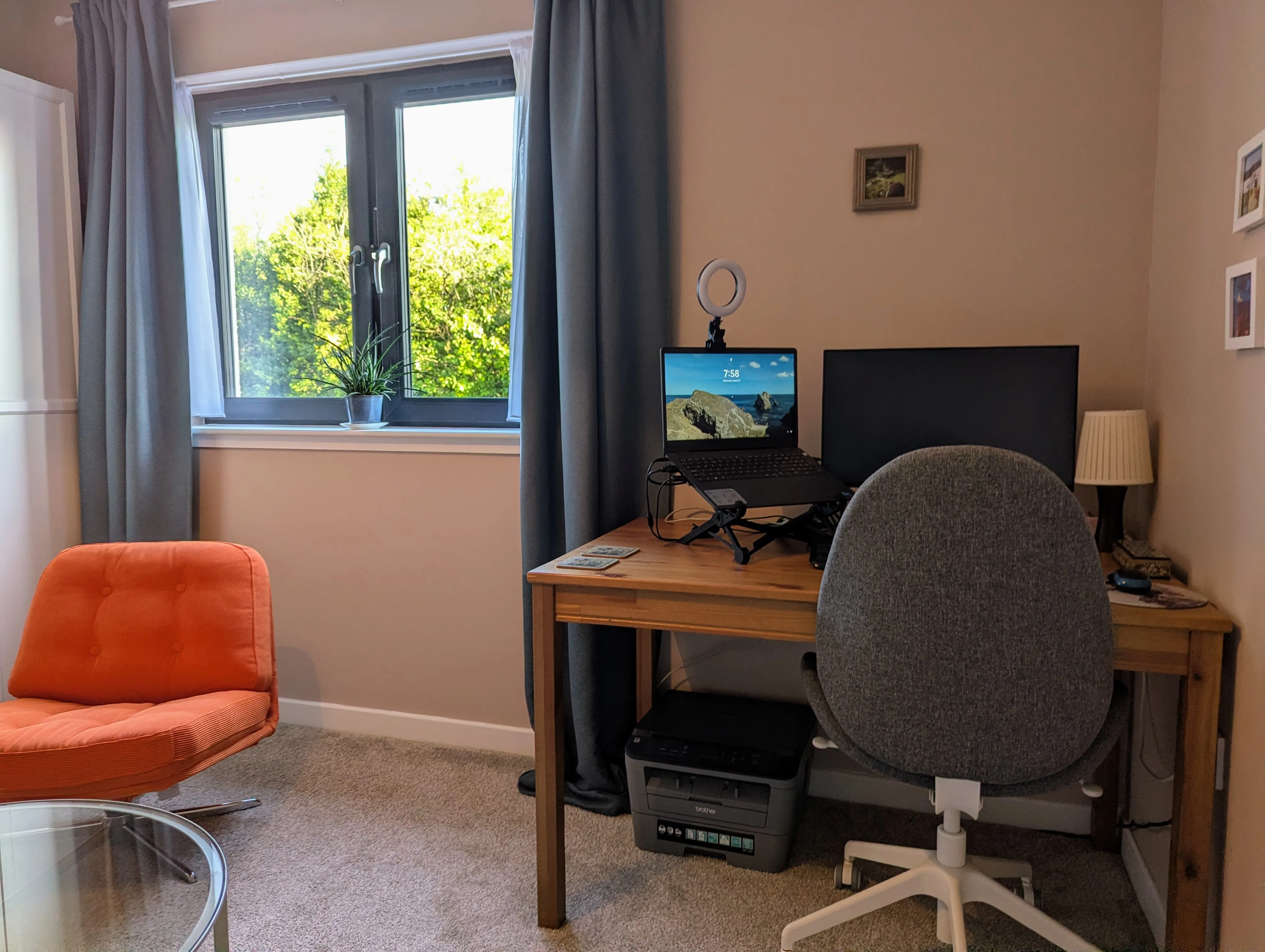
In-person sessions are held in my dedicated office and counselling room at the front of my home. Being in full control of a quiet, private, clean, and comfortable room, and having access to all of my resources and technology, means that I can offer you the best possible therapy in every session. I do have a small dog (although he will not be in the front half of the house while clients are present) - so please contact me if this isn’t acceptable. It’s also important to note that there is no waiting area available, and I may not be able to answer the door if you arrive too early (to protect your privacy, I don’t schedule back-to-back client appointments at home, but I may be online or otherwise busy before your session). For more information on my home, see Where am I - and do please get in touch if you’d like any further details. I know how important it is to understand what to expect before arriving somewhere!
Online sessions are held on Microsoft Teams. When online, we can use shared documents and whiteboards if we wish to be creative or make notes. Online therapy can be a convenient and effective way for you to join me from the comfort of your own home, but it does require a little consideration – such as the availability of suitable technology and making sure you have a private space available for each session. We can also use a mix of online and in-person sessions to suit your preferences.

Walk-and-talk therapy is reported as helpful by considerable research. Some clients are more comfortable talking through difficult or emotional subjects when active or outdoors, rather than sitting face-to-face. The outdoors can also be beneficial itself, with research showing that exposure to nature can be therapeutic on its own without any other effort! However, it’s important to note that there are some extra limits to confidentiality when outdoors - for example as others pass by - and before meeting in this way we would need to agree some procedures for emergencies, or for bumping into someone we might know. I can pass on specifics about this mode of therapy if you are interested and guide you through the considerations to help you make a decision.